Personal Story
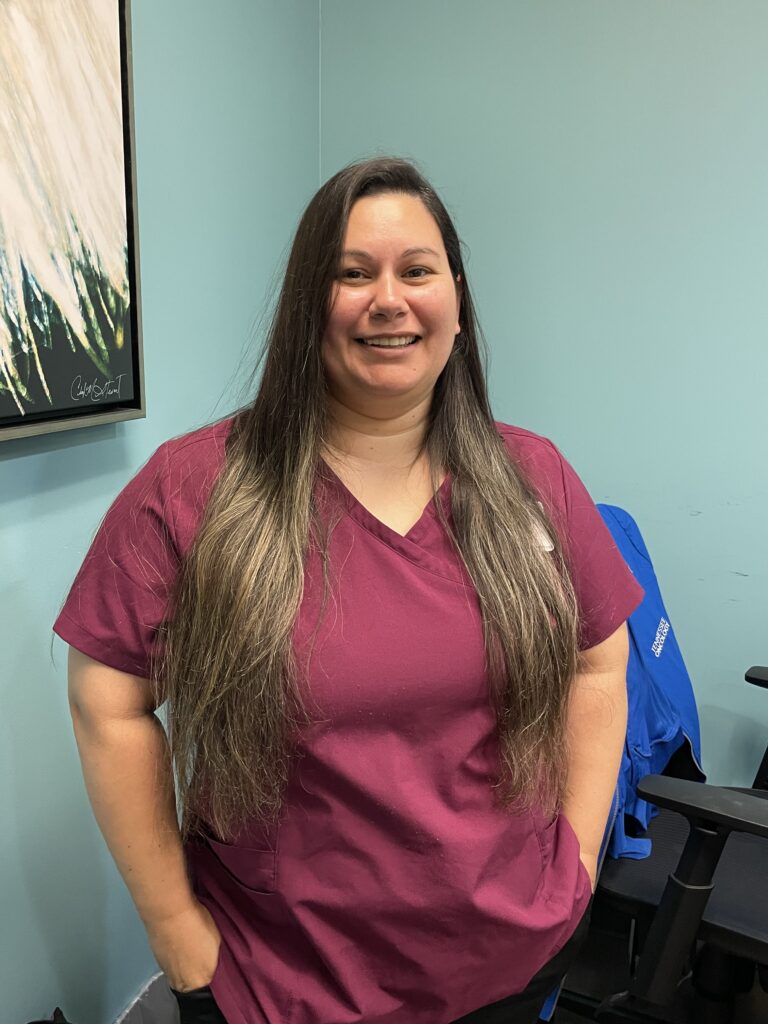
After working as a Certified Nursing Assistant (CNA) for nearly twenty years, Ana Vazquez jumped at the opportunity to expand her skill set and take advantage of a new Certified Clinical Medical Assistant (CCMA) program offered by her employer, Tennessee Oncology, in partnership with Nashville State Community College.
As a CNA, Ms. Vasquez had experience working in a wide variety of specialties and care settings, from home care and hospice to prisons and now at Tennessee Oncology, which treats half the state’s cancer patients. While she had previously considered going back to school to advance her career, she did not want to have to give up her job to do it.
As a mother of four who worked full-time, Ana appreciated that this CCMA program could meet her where she was, allowing her to continue working and earning while she was also learning. Ana and her cohort were assigned homework, readings, and tests for three hours a day, two days a week, for twelve weeks. Professors were easily accessible and truly invested in their students’ success. At the completion of the program, they all sat for the National Healthcareer Association (NHA) certification CCMA exam.
After passing her exam, Ana’s responsibilities expanded in her new role as a Certified Medical Assistant (CMA). She can now give patients injections, perform port draws and port flushes, and complete more patient paperwork, among other tasks, freeing up time for physicians to spend with their patients.
Working with elderly patients has always been a passion for Ana, and seeing young patients go through treatment and make it to remission makes her job worth it. Now she’s more motivated than ever to continue to work and advance in the oncology field.
The Value of Career Advancement
Allied health professionals have long been the cornerstone of healthcare careers, and the importance of their work is immeasurable. As in any other profession, healthcare workers, like Ana, want to grow, too – earning new credentials, taking on more responsibility and earning a higher wage.
However, twenty-two percent of surveyed nurses who have left the healthcare field cited a lack of professional growth and advancement as a top factor for leaving. Meanwhile, as the workforce shrinks, those who remain feel the effects of limited support, burnout, and emotional exhaustion.
America faces a healthcare workforce shortage, and the issue will only worsen as the number of aging Americans continues to rise while frustrated, burnt-out, or “stuck” workers leave the field. Policymakers must not only provide access and support for new members of the workforce but also retain and advance the careers of those already in it.
Investing in Workforce Development
Programs like Nashville State Community College and Tennessee Oncology’s Medical Assistant Certification Program enable allied health professionals, nursing assistants, and other clinical support staff to remain in the workforce while also advancing their careers.
This program is currently funded entirely by Tennessee Oncology because it sees value in investing in and retaining its existing workforce. Fostering the growth of staff allows their clinicians to practice at the top of their license to provide the best patient care possible.
It’s important for lawmakers to invest in workforce development to address the healthcare workforce shortage, improve retention, save our healthcare system money, and ultimately, deliver high-quality, accessible care to patients.
Next Steps
Ana plans to continue her learning in the future and is grateful for the opportunity to earn her medical assistant certification. When asked what the program meant to her, she thanked her employer, “They are trying to help people gain more education and continue to move up and go forward. They are making sure people don’t feel stuck.”
CONGRESS: SUPPORT ALLIED HEALTH TRAINING AND CERTIFICATION PROGRAMS
Address Significant Workforce Shortages In Our Nation’s Healthcare System By Enabling More Professionals Like Ana To Upskill And Earn Allied Health Certifications
Thank you to Ana Vasquez, Tennessee Oncology, Nashville State Community College, and National Healthcareer Association for contributing this powerful case study to the Healthcare Workforce Coalition.
To download a copy of this case study, click here.